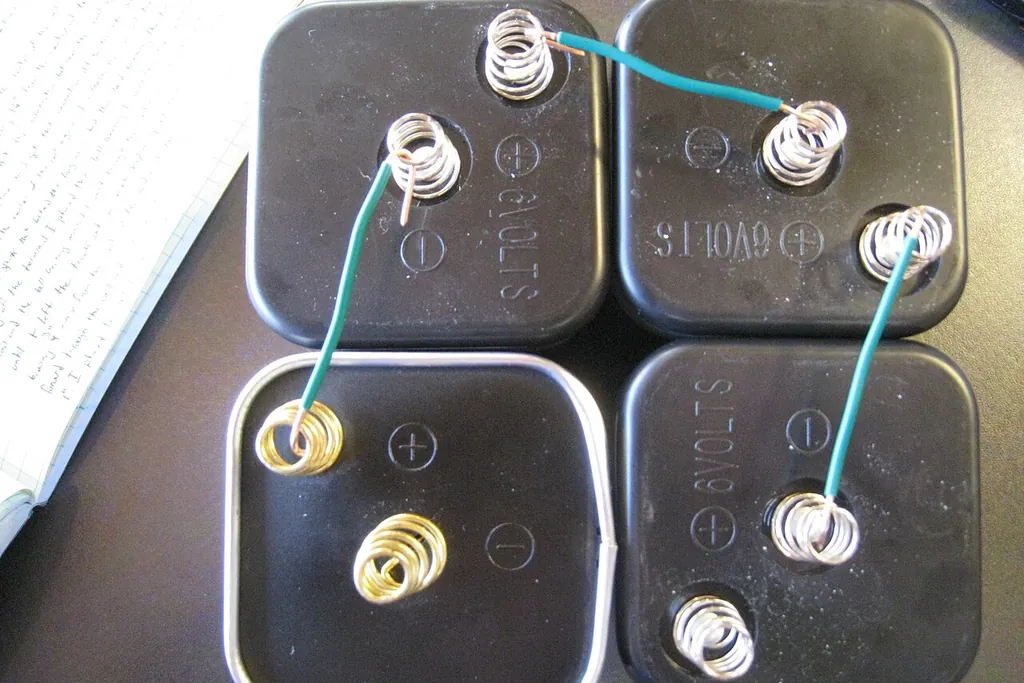
Different jobs
Starting batteries deliver a big burst of current for a few seconds to crank an engine, then get recharged right away by the alternator. They have many thin plates to give lots of surface area.
Deep-cycle batteries deliver a steady, smaller current for hours, and can be run down much further and recharged many times. They have thicker plates that hold up to deep discharges.
Dual-purpose batteries sit in between. They can start a small engine and run some accessories.
What goes where
| Use | Battery type |
|---|---|
| Car, truck, motorcycle | Starting |
| Boat engine | Starting or marine dual-purpose |
| Boat electronics and pumps | Deep-cycle or dual-purpose |
| Trolling motor | Deep-cycle |
| RV chassis | Starting |
| RV house | Deep-cycle |
| Golf cart | Deep-cycle (6, 8 or 12 volt golf cart batteries) |
| Riding mower | Small starting battery |
Why it matters
A starting battery used for deep cycling, say to run a trolling motor all day, wears out quickly because its thin plates do not handle deep discharges. A deep-cycle battery used to crank a big engine may not have enough burst current.
Lithium
Lithium batteries for boats, RVs and golf carts are built for deep cycling. Some lithium batteries can also start engines, but not all, so check what the battery is rated for.
Getting it right
When we replace a boat or RV battery, we look at what each battery actually powers and how it is charged before choosing. See boat batteries and RV batteries.
Related questions
Can I use a car battery in my boat?
For starting a small engine it can work, but a marine battery handles vibration and mixed loads better.
Can a deep-cycle battery start an engine?
Some can, especially dual-purpose. Check the cranking rating.