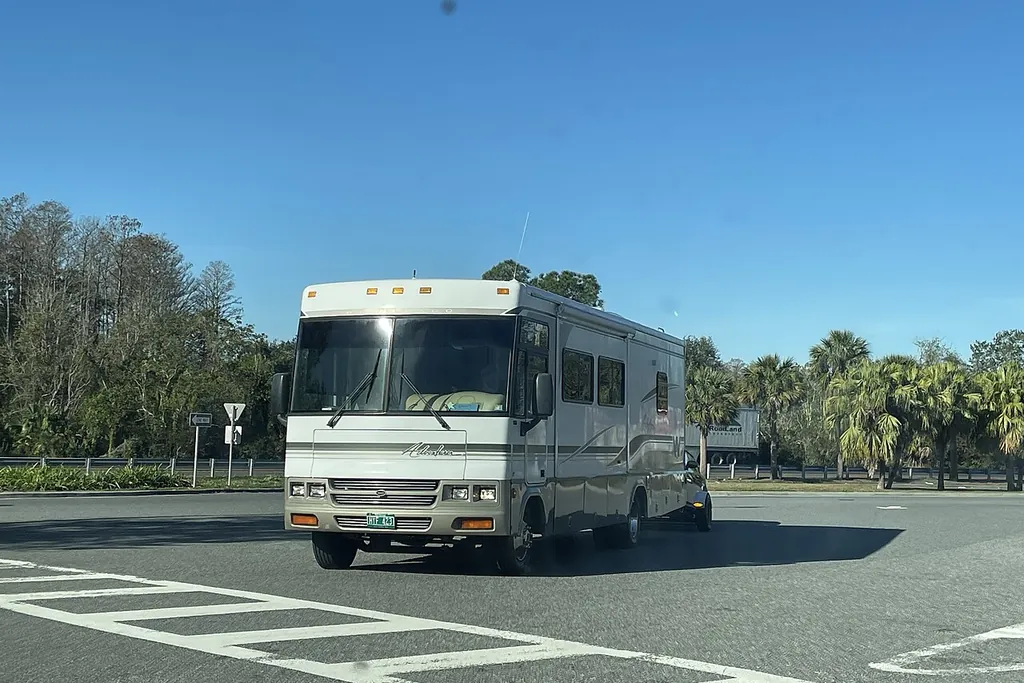
Why RV batteries die in storage
An RV that is parked and switched off is not really off. The propane and carbon monoxide detectors, control boards, clocks, stereo memory and some refrigerators draw a little power all the time. Over a few weeks, that is enough to flatten the house batteries.
A lead-acid battery that sits flat, especially in heat, sulfates quickly and loses capacity permanently. Houston summers make that faster.
Use the disconnect
Most RVs have a battery disconnect switch. Turning it off stops most of the parasitic draw. Find it and use it whenever the RV is stored without shore power. Check your manual: some detectors are wired to stay on for safety.

Shore power and the converter
If the RV is plugged in while stored, the converter charges the batteries. Many older converters hold the batteries at a voltage that is too high for long storage, which cooks flooded batteries and boils off their water. A modern smart converter or a separate maintainer handles storage better.
Solar
A small solar panel and a good charge controller can keep batteries topped up in a storage lot. Make sure the controller is set for your battery type, whether flooded, AGM or lithium.
Before your first trip
- Check the water level in flooded batteries and top off with distilled water.
- Charge fully.
- Test each battery.
- Check the chassis battery on a motorhome too. It sits just as long.
Lithium
Lithium house batteries tolerate sitting partly charged much better, and they lose little charge on their own. They still need the disconnect or a proper charger, and they should not be stored fully charged for months in extreme heat.
We test and replace RV batteries at the house or the storage lot. See RV batteries.
Related questions
Should I leave my RV plugged in all summer?
Only with a converter or charger that handles long-term storage properly.
Will a small solar panel keep my batteries charged?
Often, with a properly set charge controller.