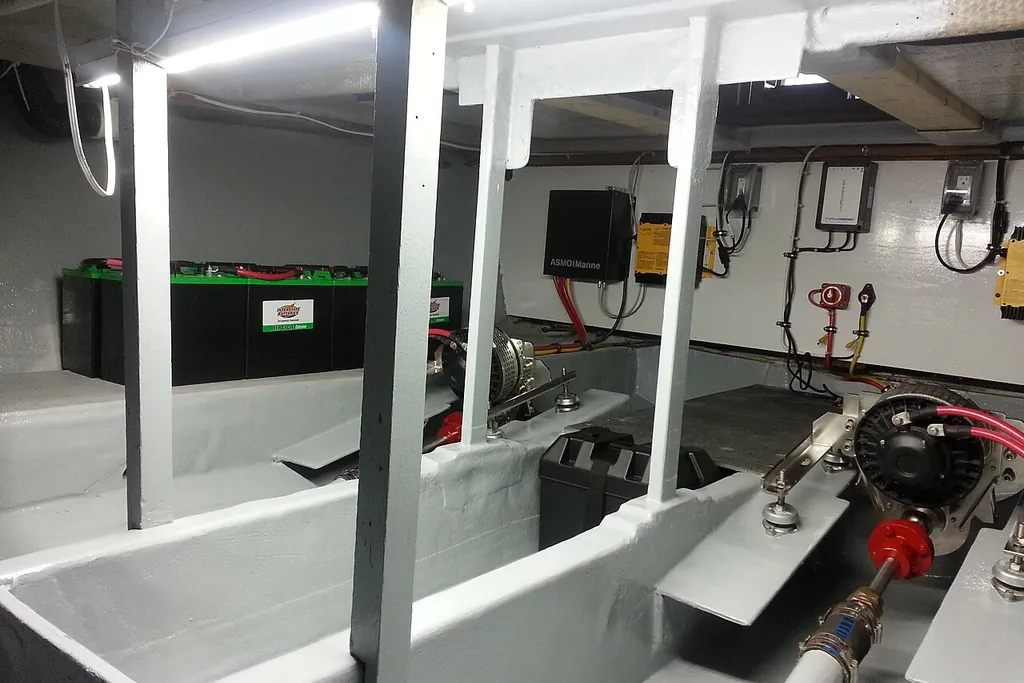
Batteries on a boat do different jobs
- Starting battery: cranks the outboard or inboard. Needs a short burst of power.
- House battery: runs the electronics, pumps, lights and radio. Needs to give steady power for hours.
- Trolling motor bank: 12, 24 or 36 volts of deep-cycle batteries wired together. Needs deep, repeated discharges.
A dual-purpose battery can do a bit of both on a small boat. On bigger setups, each job gets its own battery.
Where we work on boats
On the trailer in your driveway, in a storage lot, or at a marina that allows outside service. Tell us where the boat is and we will tell you what we can do there.

What we check
Each battery gets tested. Then the battery switch, the cables, the charger and the bilge pump circuit. A bilge pump that runs too often or a float switch that sticks can flatten a battery while the boat sits. So can a radio or fish finder wired straight to the battery.
Trolling motor banks
A 24 or 36 volt trolling bank is two or three batteries in series. Like a golf cart, they wear together, and a weak one cuts your time on the water. We test each one and match replacements. Lithium makes a lot of sense for trolling motors because of the weight and the long, steady power. See boat battery keeps dying.
Before and after storage
Boats that sit through a Houston summer, or through the slow months in winter, lose their batteries more than anything else. A maintainer and a disconnect switch help.
Questions about this service
Do you come to marinas?
Often, if the marina allows outside service. We also work at driveways and storage lots.
Should I switch my trolling motor to lithium?
If you fish a lot, often yes. It is lighter and gives steady power longer. It also needs a charger made for lithium.